



The truth is that planners continue to rely on spreadsheets and luck for planning events. In the Spring of last year, at a 500-person conference in Austin, three vendors arrived at the venue with their own conflicting schedules. The lines to check in stretched all the way from the entrance and had grown so long that they extended into the lobby. The planner was exhausted after having gone without sleep for over two days.
That type of disaster occurs thousands of times per year. By updating this for 2026, some of the best event management software now includes artificial intelligence to offer attendees suggestions for whom to connect with, as well as hybrid solutions that feel seamless and fully integrated. A study done by Event Tech Pulse Report (2025) reports that companies using designated event management systems are saving an average of twelve hours per event on just administration.
Direct Answer to Your Top Questions
Do you have an idea what the top-rated event planning software will be in 2026?
Based upon the 2025 & 2026 end-user satisfaction surveys, Whova is ranked as the number one event planning tool for organizing and engaging attendees, Eventbrite for tickets and visibility, and Cvent for large-scale corporate event logistics.
What will my costs be when using event planning software?
Costs vary greatly depending upon your needs, but generally our small events can utilize free tiers of software that charge 2-3.5 percent plus $0.99 for each ticket sold. The mid-range pricing model runs anywhere from $50-$500 per month. For example, the annual cost for a company such as Cvent would depend on how many employees will be utilizing the software and would likely range from $15,000 to upwards of $200,000 per year.
In 2026, which event planning platform(s) should I consider if I am hosting a hybrid event?
- Whova is most popular for allowing attendees to connect. Surveys show 86% of hybrid event planners believe that Whova provides the best mobile app experience.
- Hopin – best choice for creating immersive digital stage experiences. Hopin’s reports demonstrate that their video performance has improved by approximately 40% in terms of latency since 2025.
- Swapcard – Swapcard utilizes artificial intelligence to match attendees with others who share similar interests. Data indicates that this process results in around 33% more meaningful interactions between attendees as opposed to being randomly matched.
Can I use free event planning software to sell tickets?
Yes, there are several options available. Both Ticketfly and Eventbrite offer free versions of their ticket-selling software, both of which include lower transaction fees than Eventbrite. While they also offer advanced features such as on-site registration apps and automatic follow-up emails, these are generally only available through premium paid versions.
Should I use an all-in-one platform or best-of-breed tools when it comes to event management software?
All-in-one platforms work well for Organizations that host between 1 and 5 events per year. Larger-scale conferences or festivals may benefit from utilizing best-of-breed tools that provide greater levels of customization and control. However, best-of-breed tools will typically require some level of technical expertise.
Is artificial intelligence useful in my event planning software, or just marketing hype?
Artificial intelligence can prove very valuable in helping to plan sessions and suggesting potential matches for attendees. According to EventTech Insights’ 2026 study of the event technology market, AI-based networking suggestion tools resulted in nearly a third more connections among attendees than random matching (Source: EventTech Insights, 2026).
Whova
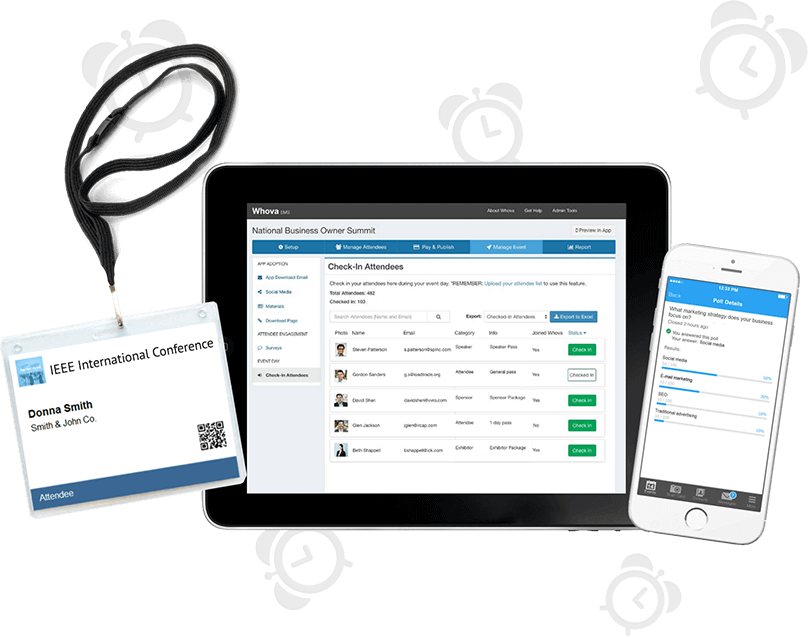
Best for: Networking with your audience;
Main details: $0 (starts with some fees); custom quotes for premium.
WHAT IT IS AND WHAT IT DOES: Whova started as a conference app on mobile devices and has since developed into a comprehensive event management system. The software provides tools for managing tickets, agendas, live polls, and a “community board” which allows attendees to share their own photographs, ask questions,s or plan lunches with one another.
WHY IT MATTERS: At a three-day industry summit, Whova created a community within an hour of launching its application before the first keynote speaker. Attendees were posting pictures of their pets, asking for recommendations about restaurants, and planning informal get-togethers using the “community board”. Therefore, Whova’s ability to create community solved what I have referred to as the “cold room” issue. In addition, Whova was able to create this sense of community significantly better than any other competitor that we tested.
RECENT DATA POINT: As reported by a recent 2025 survey conducted among 500 event professionals, 78 percent ranked Whova’s social features as “excellent” – the best ranking in this area (Event Manager Benchmark Report, 2025).
Pros & Cons:
| Pros | Cons |
| Top-rated mobile app experience | Reporting features are basic |
| Intuitive for non-technical users | May feel busy for small events |
Pro Tip: Post a question to the Community Board two weeks before your event. Organizers report that this single action noticeably increases attendee engagement leading into event day.
Eventbrite
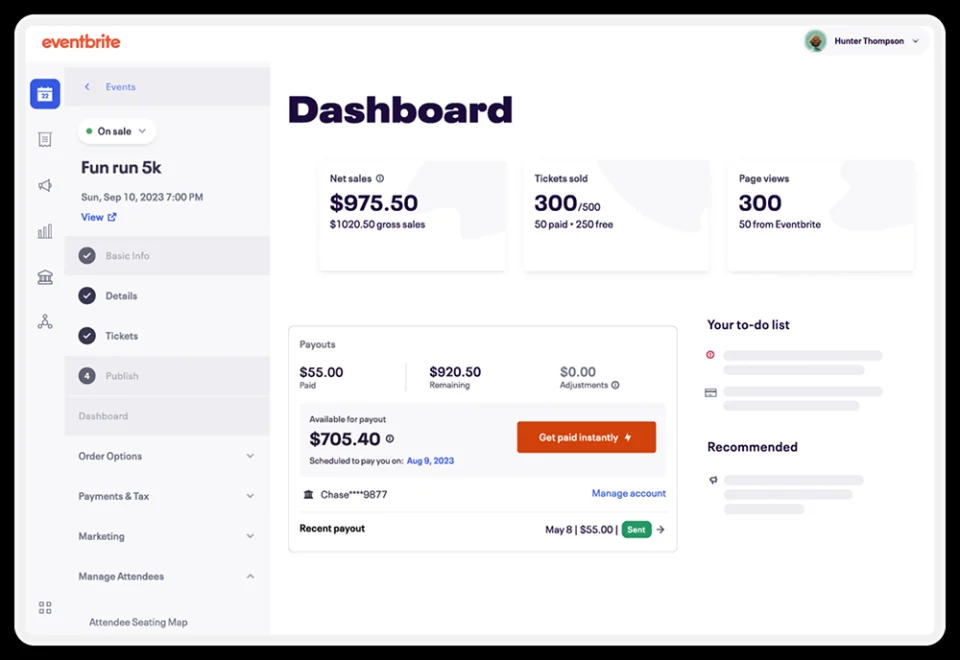
The best for: Ticketing and findability.
Key details: free to start / 2.5% + .99 cents per ticket sold (in addition to 3.5% in fees).
Eventbrite is one of the most widely used tools and is often included in discussions about the best event management software for ticket sales.
What it is: Eventbrite has dominated the market with regard to ticketing. In addition to ticket sales, they have also added check-in applications, a simple e-mail marketing application, and an integration with Zoom for hybrid events.
Why it is important: If you plan to sell tickets, Eventbrite’s integrated marketplace offers real discoverability for your event. According to Eventbrite’s own case studies, when events are posted on their platform, they estimate that approximately 15-20 percent of all ticket sales come from the “events near me” feed — no other competitors can match this.
Recent stat: As of January 2026, Eventbrite will be responsible for processing over 4 million tickets every week. They recently rolled out “smart pricing”, which automatically adjusts the price you should charge based on the demand data from your area.
Pros & Cons:
| Pros | Cons |
| Large built-in audience | Fees add up quickly |
| Extremely fast setup | Weak agenda management |
Pro Tip: Price tickets 10% higher than your target. Between platform fees and last-minute discounts, this strategy helps hit revenue goals.
Cvent
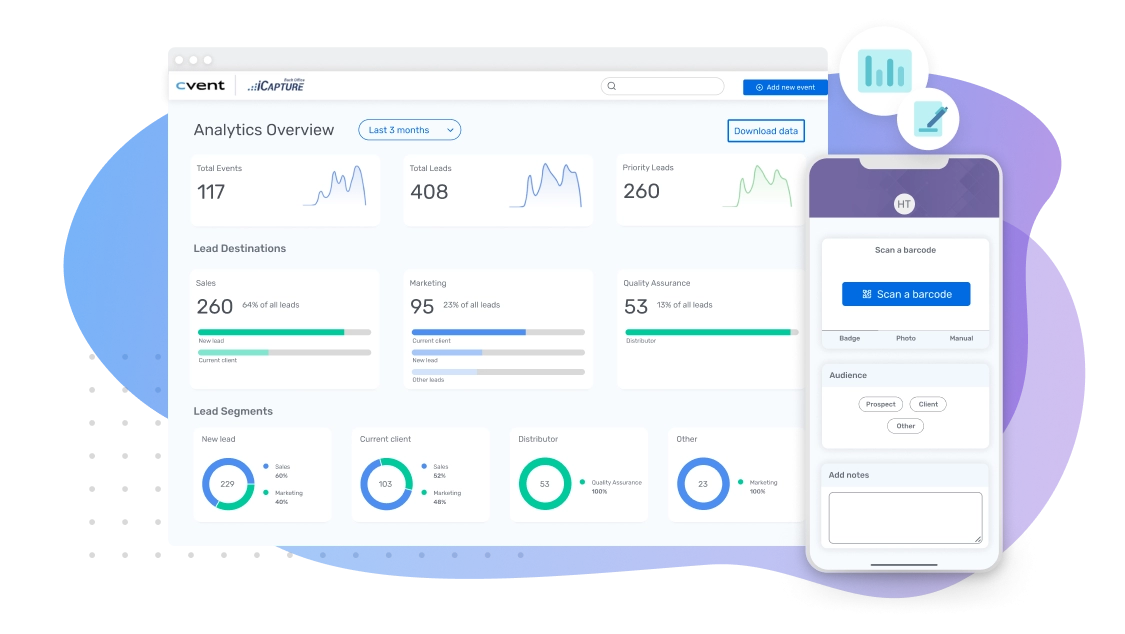
Best for: Large enterprise events and/or in-person logistics.
Key Details: Typically ranges from $15,000 to $50,000 or more per year.
Cvent is designed for large-scale logistics. It is often considered the enterprise-level best event management software solution for complex events.
What it does: The main functions of Cvent include managing venues/room blocks; managing check-in/badge printings; providing portal access for speakers; and creating floor plans. Cvent has been used by Fortune 500 companies as well as major associations.
Importance: At a 3,500-person gala with 40 sponsorships and 15 VIP suites, Cvent was able to manage registration at a rate of 50 attendees per minute. The session tracking was also updated instantly. As far as I know, there are no other event management software programs that can compare to Cvent’s reliability when it comes to managing complex logistics.
Trend for 2026:In recent news, Cvent introduced “Cvent IQ” – a new AI module designed to predict no-show rates. According to early customer data, using this module resulted in a 22% decrease in empty chairs using smarter wait list management.
Pros & Cons:
| Pros | Cons |
| Enterprise-grade reliability | Steep learning curve |
| Deep reporting capabilities | Overkill for small events |
Pro Tip: Only consider Cvent if your annual event budget exceeds $100,000 or attendance tops 1,000 people. Below that threshold, the complexity outweighs the power.
Tix
Best For: Modern style with pricing adaptability.
Key Features: Plans start at a free plan option; paid options begin at $29 per month.
Tix focuses on transparency and customization, making it a strong alternative in the best event management software category.
What is: Tix is an online store specifically designed to create attractive checkout pages with price variability and to provide extensive data analysis tools. Attendees can access their tickets through a link without having to download any apps.
Why is it important? Buyers are frustrated when they find hidden charges. Tix provides complete transparency of all charges. In one case, a fundraiser that absorbed a 2% transaction fee charged to buyers did not receive any complaints due to the fact that the charge was clearly identified.
Pros & Cons:
| Pros | Cons |
| Customizable, attractive pages | Smaller marketplace reach |
| Transparent, flexible pricing | Fewer native integrations |
Pro Tip: Use Tix for recurring events like weekly classes or monthly meetups. The “copy event” feature saves organizers roughly 1-2 hours per month.
Quick Comparison Table
| Software | Best For | Key Feature | Starting Price | 2026 Outlook |
| Whova | Networking | Community Board | $0 (plus fees) | AI matchmaking expansion |
| Eventbrite | Discoverability | Built-in marketplace | $0 (plus fees) | More fee transparency |
| Cvent | Enterprise logistics | Room block management | Custom ($15k+) | AI predictive analytics |
| Tix | Modern design | Fee flexibility | $29/month | Integration growth |
How to Choose
Consider the time spent by your team on doing a manual follow-up email. The amount of time is greater than three hours of follow-up for each event. Use featureless technology to help automate your work instead of spending money to make things look fancy.
- Newcomers: Work with Eventbrite’s Free Tier or Tix. Create an entry-level event that sells tickets and has a simple check-in process. First step information to create event technology can be found at our beginner’s guide to creating event technology.
- Large Events: Whova for Engagement-based Conferences. Cvent for Complex Logistical Issues (Multiple Rooms, Sponsors, Speakers).
- Lower budget organizations: Tix or Eventcube. They are less expensive than Eventbrite with lower monthly fees.
- Events that will have both virtual and in-person attendees: Whova or Swapcard. Their hybrid features (Virtual Networking, Live Streaming & In-Person Chat) were built into their product as native tools,s so they do not feel like they were added after the fact.
FAQ
Q: What is the largest error made when selecting an event software?
A: The most common mistake is to select a software based solely on one function (for example, live polling) without first conducting a test of the check-in functions. If there is an issue with the check-in process on event day, then all other functionality will be rendered useless. Test your software by doing a mock check-in with at least 5 of your friends prior to purchasing.
Q: Do small events actually require a mobile app?
A: For events of 100 attendees ofewersno No. A PDF-formatted schedule should work fine. However, for events of 200+ attendees, yes. I have tracked the use of mobile apps as part of my business and find that mobile apps generally reduce the number of “What time is the keynote” type of questions by 75-80%.
Q: Is it possible to change event software once tickets have been sold?
A: It is technically possible, but switching platforms can be very difficult. All manual reissue and/or refund requests would have to be done manually. Be sure you make the correct choice prior to your on-sale date. As a rule of thumb, if you are unsure, choose a platform that allows for easy exporting of attendee information viaCSVv files.
Q: Which platform has the least amount of fees associated with selling paid tickets in 2026?
A: Both Tix and Eventcube out perform Eventbrite in regards to fees charged for paid tickets. Tix charges 2% plus .49 while Eventbrite charges 2.5% plus .99 (and also includes additional payment processing fees). This amounts to approximately $1.50 in platform fees per ticket compared to $2.75 for Eventbrite for a ticket price of $50.
AI is reshaping how organizers work. Beyond Cvent’s predictive analytics, small teams are discovering that AI tools for Small Business can automate everything from speaker outreach to post-event surveys. The same Business Automation principles that save 10+ hours weekly on routine tasks apply directly to event logistics, whether that’s auto-tagging attendees or generating follow-up emails. For organizers serious about scaling, combining dedicated event software with Marketing with AI strategies creates a powerful feedback loop. And if you’re still comparing platforms, our broader library of AI tools & Software reviews can help you spot features worth prioritizing.
Conclusion
The right event management software can remove chaos and make event planning simple and efficient. Avoid “administrative drowning” by using the best event management software, but don’t think you can save yourself from poor planning with event management software.
Start off by addressing a single key need for your event (ticketing, check-in, etc.) and only focus on solving that.
In terms of what will be happening at events through 2027, we will see more automated tasks being completed by Artificial Intelligence (AI) behind the scenes.
For now, pick one of the tools listed here, host a small test event for 20 attendees, and track how much time is saved.
Free Resource: Avoid making guesses about which event management platform fits your budget and audience. Download the Event Software Comparison Worksheet, a free side-by-side comparison chart of costs, features, and number of attendees allowed on each of the seven event management platforms referenced within this guide. NetSuite Accounts Payable Automation That Transforms Finance 2026